
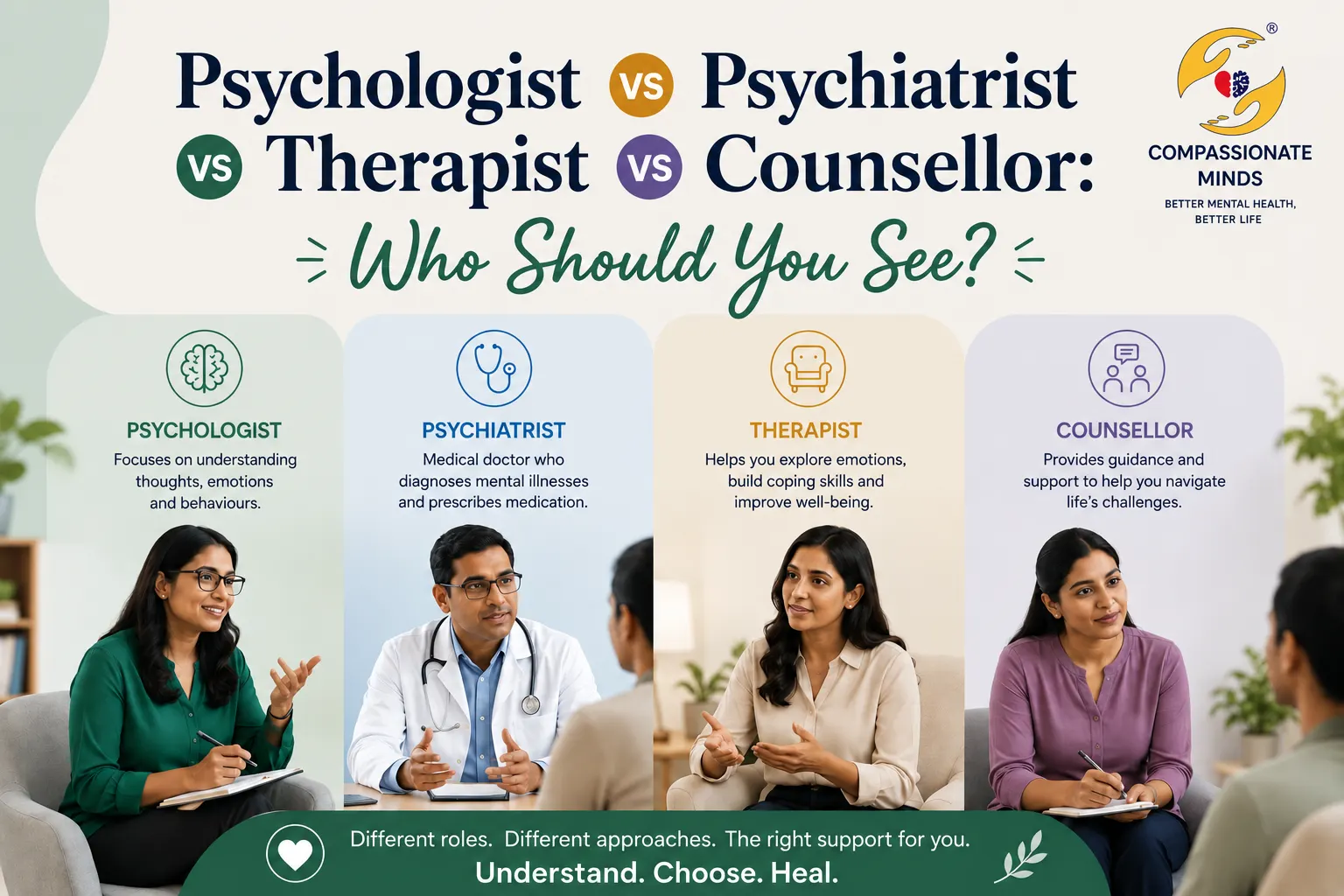
Difference between Psychologist vs Psychiatrist vs Therapist vs Counsellor
Introduction
Seeking mental health support in India often creates confusion because many job titles sound similar. Distinguishing between psychologist vs psychiatrist vs therapist vs counsellor is essential for finding the right help.
Many people mix up psychiatric and psychological services. Because of this, individuals often choose an expert based on location or advertising instead of matching credentials to their real health needs. Choosing the wrong expert can delay recovery—for example, someone with serious brain chemical imbalances might receive basic coaching, while someone going through a short life problem might end up taking unnecessary medicines.
Understanding the clear differences across psychologist vs psychiatrist vs therapist vs counsellor options helps everyone get quick and effective support.
Types of Mental Health Professionals
Mental health care includes different experts, each having different degrees, legal rights, and methods to help people.
| Category | Professional | Qualifications & Scope |
|---|---|---|
| Medical / Physical Focus | Psychiatrist | MBBS + MD/DPM (Medical checkup, brain focus, gives medicine) |
| Talk Therapy & Testing | Clinical Psychologist | M.A. / M.Phil / Ph.D. (Mind tests, structured talk therapy) |
| Short-Term & Guidance | Counsellor | Diploma / M.A. in Counselling (Life changes, daily stress support) |
| General Category | Therapist | General title for anyone offering talk therapy |
Psychiatrist
A psychiatrist is a medical doctor who completes an MBBS degree followed by an MD or DPM in Psychiatry. Psychiatrists diagnose mental health conditions and are the only ones legally allowed in India to prescribe mental health medicine.
They mainly treat serious and long-term conditions linked to brain chemical imbalances, such as deep depression, bipolar disorder, schizophrenia, OCD, and severe anxiety.
When comparing a psychologist vs psychiatrist, the main difference is medical authority and medicine prescribing rights. Psychiatrists do medical tests, check physical health, and manage medicines, often working with therapists for complete care.
Psychologist
A psychologist holds an advanced degree in psychology, like a Master's degree (M.A./M.Sc.), an M.Phil in Clinical Psychology, or a Doctorate (Ph.D./Psy.D.).
Psychologists specialize in human behavior, mind tests, and talk therapies like Cognitive Behavioral Therapy (CBT). Psychologists in India cannot prescribe medicine.
A psychologist helps people understand bad habits, emotional trauma, ongoing stress, mood problems, and deep personal issues through regular talk sessions.
Therapist
The term "therapist" is a general word used for talk-therapy experts in India. A therapist can be a psychologist, family counsellor, psychiatric social worker, or licensed psychotherapist.
Understanding the psychiatrist vs therapist difference clarifies that psychiatrists treat physical and chemical brain issues with medicine, while therapists use talk therapy.
Also, when comparing a therapist vs counsellor, a therapist usually handles deeper and longer emotional problems, while a counsellor handles immediate everyday stress. Always check degrees before hiring any therapist.
Counsellor
A counsellor usually has a diploma or Master's degree in counselling psychology. Counselling focuses on short-term solutions for everyday stress, life changes, career confusion, and relationship problems.
In comparing a therapist vs counsellor, counselling works on quick problem-solving rather than deep mental therapy.
When looking at a psychologist vs counsellor, a psychologist treats complex mental conditions, while a counsellor helps people make good life decisions and manage practical stress.
Counselor vs. Psychologist vs. Psychiatrist
Comparing a psychologist vs psychiatrist vs therapist vs counsellor requires checking their focus, testing skills, and medicine permissions.
The choice between a psychologist vs psychiatrist mostly depends on whether medicine is needed alongside talk therapy.
| Feature | Psychiatrist | Psychologist | Counsellor |
|---|---|---|---|
| Education Background | Medical Degree (MBBS + MD/DPM) | M.A. / M.Phil / Ph.D. in Psychology | Diploma / M.A. in Counselling |
| Can Give Medicine? | Yes (Licensed Doctor) | No | No |
| Main Treatment Method | Medical tests & Medicine | Structured Talk Therapy (CBT) | Practical Short-Term Advice |
| Best Used For | Deep Depression, Bipolar, OCD | Ongoing Anxiety, Trauma, Bad Habits | Grief, Career Stress, Family Fights |
| Focus of Work | Brain & Body Chemical Balance | Changing Thought Patterns & Habits | Quick Problem Solving & Coping Skills |
Education
Study requirements decide what each mental health expert is allowed to do.
| Academic Level | Qualification | Professional Path |
|---|---|---|
| Short-Term Course | Diploma / Certificate (6–12 months) | Guidance Counsellor / Life Coach |
| College Degree | Bachelor's Degree (BA / B.Sc / MBBS) | Basic Study Foundation |
| Master's Degree | M.A. / M.Sc / M.Phil in Psychology | Licensed / Professional Psychologist |
| Medical Specialist | MBBS + MD in Psychiatry / DPM | Psychiatrist (Medical Doctor) |
Certifications
Short courses or diplomas (6 to 12 months) teach basic listening and coaching skills. While useful for general guidance, short courses in a therapist vs counsellor background do not give someone the license to treat real mental illnesses.
Bachelor's Degrees
A college degree in psychology (B.A. or B.Sc.) covers basic human behavior and research. For psychiatrists, the compulsory first degree is an MBBS, which covers medical science, human body systems, and medicines.
Master's Degrees
A Master's degree (M.A. or M.Sc. in Psychology) is the minimum requirement to work as a professional psychologist or counsellor. Master's programs include real practical training, mind tests, and therapy skills.
Medical School or Doctorate
Comparing psychologist vs psychiatrist study paths shows very different educational steps:
- Psychiatrist: Requires completing an MBBS degree plus 2 to 3 years of specialist study (MD or DPM) in hospital psychiatric wards.
- Clinical Psychologist: Requires a 2-year post-master's M.Phil in Clinical Psychology from an RCI-recognized institute, or a Ph.D. with clinical training.
Salaries
Earnings in the Indian mental health sector depend on medical licenses, degrees, and hospital settings.
| Professional Role | Average Yearly Salary Range (INR) |
|---|---|
| Psychiatrist | ₹8,00,000 – ₹25,00,000+ |
| Clinical Psychologist | ₹4,00,000 – ₹12,00,000 |
| Counsellor / Therapist | ₹2,50,000 – ₹7,00,000 |
| Life Coach | ₹3,00,000 – ₹9,00,000 |
- Psychiatrists: Earn the highest salaries because of their medical degree, averaging ₹8,00,000 to ₹25,00,000+ per year.
- Clinical Psychologists: Usually earn ₹4,00,000 to ₹12,00,000 per year, based on experience and private clinic setup.
- Counsellors & Therapists: Generally earn ₹2,50,000 to ₹7,00,000 per year in schools, clinics, or community groups.
- Life Coaches: Earn ₹3,00,000 to ₹9,00,000+ per year, depending on marketing and client network.
Summary
Picking the right expert depends on how severe your problem is:
- Psychiatrists are best for severe mental distress, body symptoms, or when medicine is needed.
- Psychologists are best for long-term anxiety, emotional pain, bad habits, and trauma needing talk therapy.
- Counsellors are best for quick problems like school stress, career changes, or simple relationship fights.
Knowing the distinction in psychologist vs counsellor roles and the full psychologist vs psychiatrist vs therapist vs counsellor guide helps everyone choose the right care easily.
Frequently Asked Questions (FAQ)
Is a psychiatrist better than a counsellor?
Neither is better; they do different jobs. A psychiatrist is a medical doctor who treats severe mental illness with medicine. A counsellor gives short-term guidance for daily stress. If you have serious brain or body symptoms, see a psychiatrist; if you have simple life problems, see a counsellor.
What is the difference between counsellor, psychologist, and psychiatrist?
A psychiatrist has a medical degree (MBBS + MD) and can give medicine. A psychologist has a Master's or Ph.D. degree and gives talk therapy without medicine. A counsellor has a diploma or Master's degree and helps with short-term stress.
What is the difference between a psychiatrist and a therapist?
The main difference in a psychiatrist vs therapist search is medical training. A psychiatrist is a medical doctor who gives medicine. "Therapist" is a broad title for anyone doing talk therapy, like psychologists or family counsellors.
What is a red flag for a therapist?
Main warning signs include:
- Breaking privacy or bad behavior.
- Forcing their personal beliefs or religion on you.
- Promising instant or guaranteed cures.
- Hiding their college degrees or certificates.
How to recognize a bad therapist?
A bad therapist might talk too much about themselves, judge you, ignore your feelings, or have no clear plan for your sessions. If you feel uncomfortable after a few meetings, look for a new expert.
Which is better, a psychologist or a counsellor?
When checking psychologist vs counsellor, choice depends on your needs. A psychologist is trained for serious mental pain, long anxiety, and deep trauma. A counsellor is best for short-term problems like job stress or family fights.
 Mobile No. : +91-9151006808