
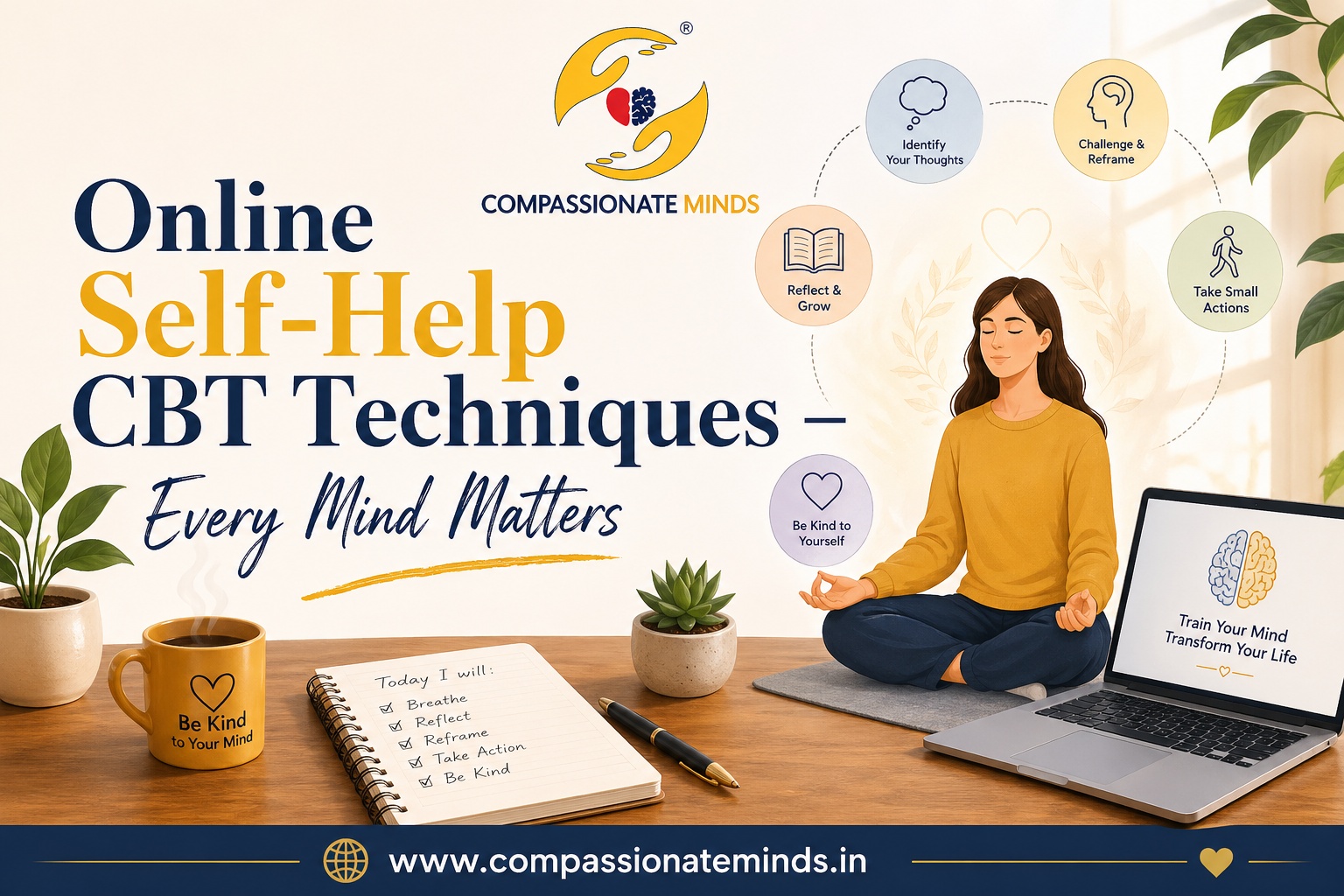
Online Self-Help CBT Techniques - Every Mind Matters
Mental health is something most people ignore until it starts affecting daily life. Stress, anxiety, overthinking, and emotional exhaustion are becoming very common, yet many individuals don’t know where to begin. Often, the first instinct is to search for a therapist near me, hoping to find the right guidance. While professional support is important, there are also practical self-help techniques that can help you understand and manage your thoughts better. One of the most effective approaches is Cognitive Behavioral Therapy, commonly known as CBT. It is a structured method that focuses on how your thoughts influence your emotions and behaviors. The best part is that many CBT techniques can now be practiced online, making mental health support more accessible, flexible, and easy to start. CBT is based on a simple idea—our thoughts, feelings, and actions are deeply connected. When negative thoughts become a habit, they start affecting how we feel and behave. Over time, this can create a cycle that feels difficult to break. CBT works by helping you identify these patterns and replace them with more balanced and realistic thinking. Instead of reacting automatically, you learn to pause, observe, and respond in a healthier way. This is why CBT is widely used across the world and is considered one of the most effective psychological approaches. Many people are not even aware of the thoughts running in their minds throughout the day. These automatic thoughts often appear instantly in response to situations and feel completely true in the moment. For example, after making a mistake, someone might think, “I always mess things up.” Over time, such thoughts become beliefs, which then affect confidence and decision-making. The first step in CBT is simply noticing these thoughts. Once you become aware of them, you begin to understand that not every thought is a fact. This awareness alone can create a powerful shift. After identifying negative thoughts, the next step is to question them. Instead of accepting them blindly, CBT encourages you to look at them from a different perspective. Ask yourself whether there is actual evidence behind the thought or if it is just an assumption. Often, you will realize that your mind is exaggerating or focusing only on the negative side of a situation. Reframing does not mean forcing positivity. It means finding a more balanced way to look at things. For example, changing “I can’t do this” to “This is difficult, but I can try step by step” can reduce stress and increase confidence. When emotions feel heavy, people often withdraw from activities they once enjoyed. This creates a cycle where inactivity leads to more negative feelings, and those feelings lead to further withdrawal. Behavioral activation focuses on breaking this cycle through small, intentional actions. Instead of waiting to feel motivated, you take action first. These small steps may seem insignificant, but they create momentum and slowly improve your mood. Journaling is one of the simplest yet most effective CBT techniques. Writing down your thoughts helps you understand what is happening in your mind and why. When you put your thoughts on paper, they become easier to analyze. You can identify patterns, triggers, and emotional responses more clearly. Over time, this practice builds self-awareness and helps you respond more consciously instead of reacting impulsively. It also creates a sense of release. Sometimes, just expressing your thoughts can reduce the intensity of emotions. Mindfulness is often combined with CBT to strengthen its effectiveness. It involves focusing on the present moment without judgment. Instead of getting caught in a loop of overthinking, mindfulness teaches you to observe your thoughts without reacting immediately. You begin to notice that thoughts come and go, and you don’t have to follow each one. This practice helps reduce anxiety and brings a sense of calm. It allows you to step back from overwhelming emotions and handle situations more clearly. Avoidance is a natural response to fear, but it often makes anxiety stronger over time. CBT introduces the concept of gradual exposure, where you slowly face situations that make you uncomfortable. This step-by-step approach helps your mind realize that the feared situation is not as overwhelming as it seemed. Over time, your anxiety reduces, and your confidence grows. One of the most overlooked aspects of mental health is how we talk to ourselves. Many people are extremely critical of their own mistakes and struggles. CBT encourages a shift in this inner dialogue. Instead of being harsh, you learn to be understanding and supportive toward yourself. Treating yourself with kindness does not mean ignoring problems. It means acknowledging them without adding unnecessary pressure or negativity. This change in perspective plays a major role in emotional healing. Online self-help CBT tools have made it easier for people to work on their mental health independently. These platforms offer guided exercises, structured modules, and practical techniques that can be followed at your own pace. They provide flexibility and privacy, which makes it easier for many individuals to start their journey. You can practice whenever you feel comfortable, without any external pressure. However, these tools work best when used consistently. The more regularly you engage with them, the more effective they become. While self-help techniques are powerful, they are not always enough. There are times when emotional challenges require deeper support and professional guidance. If you feel stuck, overwhelmed, or unable to manage daily life, it may be time to seek help. Professional therapy provides a safe space to explore your thoughts and emotions in a structured way. Self-help and therapy are not separate paths—they work best when combined. Self-help builds awareness, while therapy provides deeper understanding and direction. Online self-help CBT techniques have made mental health support more approachable and practical. They give individuals the tools to understand their thoughts, manage emotions, and take control of their behaviors in a structured way. Starting with small steps and practicing consistently can create meaningful changes over time. While many people begin by searching for a therapist near me, integrating self-help strategies can make the journey more effective and empowering. At the same time, for those who need deeper and more personalized support, options like solo therapy sessions Gurgaon provide a focused and safe environment to work through challenges and build long-term emotional strength. In the end, mental wellbeing is not about perfection—it is about awareness, effort, and the willingness to grow.Introduction
What is CBT and Why is it Effective?
Understanding Negative Thought Patterns
Challenging and Reframing Thoughts
Behavioral Activation and Small Actions
The Power of Journaling
Mindfulness and Present Awareness
Facing Fears Gradually
Self-Compassion and Inner Dialogue
Role of Online CBT Tools
When to Seek Professional Help
Conclusion
 Mobile No. : +91-9151006808