
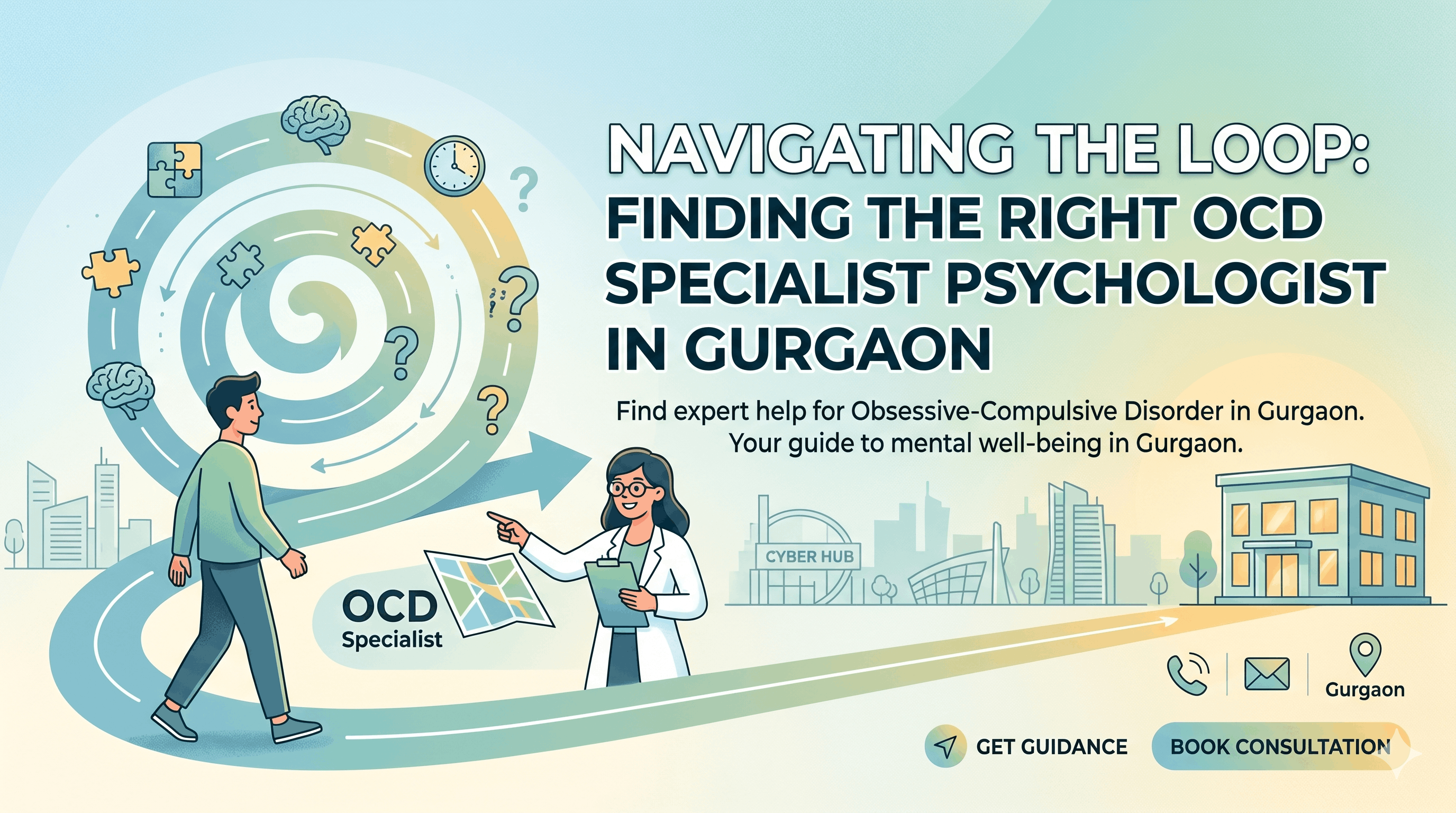
Navigating the Loop: Finding the Right OCD Specialist Psychologist in Gurgaon
Navigating the Loop: Finding the Right OCD Specialist Psychologist in Gurgaon
Living with Obsessive-Compulsive Disorder (OCD) can feel like being trapped on a continuous, exhausting carousel. The intrusive thoughts spin around relentlessly, and the urge to perform repetitive actions to quiet them can completely consume your day. If you or someone you love is fighting this hidden battle, it is important to know two things: your feelings are entirely valid, and you do not have to handle this alone.
While OCD can feel incredibly isolating, it is a highly treatable neurological and psychological condition. The key to breaking free from this cycle lies in getting targeted, evidence-based support from a trained mental health professional. If you are looking for structured, empathetic guidance to manage your symptoms, connecting with an experienced ocd specialist psychologist in Gurgaon at Compassionate Minds can be your vital first step toward long-term relief and healing.
Understanding OCD: Beyond the Cleanliness Myth
In popular culture, OCD is frequently joked about or oversimplified. It is often reduced to a quirky obsession with neatness, symmetrical desk layouts, or washing hands. However, anyone who lives with the condition knows that the reality is far more complex and distressing.
OCD is primarily broken down into two distinct components:
- Obsessions: These are persistent, unwanted, and intrusive thoughts, mental images, or urges that trigger intense anxiety or distress. Common themes include fears of contamination, worries about harming others, a need for extreme symmetry, or distressing taboo thoughts.
- Compulsions: These are repetitive behaviors or mental acts that a person feels driven to perform in an attempt to ease the anxiety caused by their obsessions. This might include excessive checking (locks, stoves), counting, repeating specific phrases mentally, or ritualistic cleaning.
The tragedy of the cycle is that the relief provided by a compulsion is only temporary. It actually reinforces the brain's false alarm system, making the next obsession even stronger. Breaking this stubborn loop requires specialized psychological interventions.
Why You Need a Dedicated OCD Specialist
When looking for mental health support, it is easy to assume that any general therapist can treat OCD. While general counseling is wonderful for everyday stress, relationship issues, or mild anxiety, OCD requires a highly specific, clinical approach.
Here is why working with a specialized psychologist makes all the difference:
1. Tailored Diagnostic Accuracy
OCD can frequently mask itself or co-occur with other conditions like Generalized Anxiety Disorder (GAD), depression, or ADHD. A dedicated ocd specialist psychologist in Gurgaon has the specific clinical training to look past surface symptoms, identify subtle mental rituals, and provide an accurate diagnosis.
2. Avoiding Therapy Traps
Standard talk therapy can sometimes backfire with OCD. For instance, if a therapist constantly reassures an OCD patient that their intrusive fears won't come true, that reassurance can inadvertently become a new compulsion. Specialized psychologists know how to avoid these common therapeutic traps.
3. Mastery of Evidence-Based Protocols
The gold standard for OCD treatment is a very specific branch of Cognitive Behavioral Therapy (CBT) called Exposure and Response Prevention (ERP). An expert specialist understands how to build a gradual, safe, and highly effective ERP plan tailored uniquely to your triggers.
Exposure and Response Prevention (ERP)
ERP is the most reliable tool available for managing OCD. Under the careful guidance of an ocd specialist psychologist in Gurgaon, you will deliberately expose yourself to a thought or situation that triggers your anxiety (the Exposure). Instead of performing your usual ritual to fix it, you will practice sitting with that discomfort until it naturally fades away on its own (the Response Prevention). Over time, your brain learns that the perceived danger isn't actually real.
Cognitive Behavioral Therapy (CBT)
CBT helps you examine the underlying cognitive distortions that feed your obsessions. You will learn to identify overinflated responsibility (feeling like you are personally responsible for preventing terrible things from happening) and practice cognitive restructuring to balance those thoughts.
Acceptance and Commitment Therapy (ACT)
ACT encourages individuals to accept their intrusive thoughts as mere words or passing mental events rather than absolute facts. By changing your relationship with your thoughts, you can focus your energy on living a meaningful life aligned with your true values, rather than fighting an endless war with your mind.
What to Expect in Your First Session
Taking the step to visit a psychological clinic can cause some initial nervousness. Knowing what lies ahead can help ease that tension. Your initial sessions are designed entirely around building trust, safety, and a clear baseline.
- Clinical Assessment: Your psychologist will use standardized diagnostic interviews and questionnaires to understand the specific nature, severity, and themes of your obsessions and compulsions.
- Detailed History Taking: You will discuss when your symptoms first began, how they affect your daily work or school performance, and how they impact your personal relationships.
- Psychoeducation: A vital component of early therapy is learning exactly how OCD operates. Your therapist will explain the mechanics of the anxiety loop so you can view the condition objectively, separate from your own identity.
- Collaborative Goal Setting: Together, you and your therapist will outline what recovery looks like for you and construct a step-by-step roadmap to achieve it comfortably.
Finding Hope in Gurgaon at Compassionate Minds
Recovery from OCD is not about magically ensuring an intrusive thought never crosses your mind again; it is about taking away the power those thoughts hold over your actions.
At Compassionate Minds, we recognize the profound courage it takes to reach out for mental health support. Our compassionate approach blends rigorous scientific methodologies with a warm, non-judgmental environment. By working closely with a qualified ocd specialist psychologist in Gurgaon, you will learn actionable strategies to quiet the mental noise, face your anxieties safely, and build lasting psychological resilience.
You do not have to let obsessions dictate how you live your life. Safe, professional, and deeply empathetic care is available right here in your neighborhood.
Frequently Asked Questions
Can OCD be cured completely without medication?
For many individuals with mild to moderate OCD, dedicated psychological therapies like ERP and CBT are highly effective on their own. For severe cases, a combined approach involving both medication (to lower base anxiety levels) and therapy often yields the best results. A trained psychologist can evaluate your specific situation and coordinate with a psychiatrist if needed.
How long does OCD treatment usually take to show results?
Therapy timelines vary significantly based on symptom severity and individual consistency. However, many people engaging in structured ERP therapy begin to notice a meaningful reduction in distress and compulsion frequency within 12 to 20 weekly sessions.
What causes OCD to develop?
OCD is a complex condition caused by a combination of neurobiological, genetic, and environmental factors. Research indicates it is linked to communication imbalances in specific areas of the brain and changes in serotonin levels. It can also be triggered or worsened by prolonged high stress or major life transitions.
How can I support a family member who has OCD?
The best way to help is by learning about the condition and avoiding participating in their compulsions. While it is tempting to offer constant reassurance or assist with cleaning/checking rituals out of love, doing so accidentally prolongs the cycle. Encourage them gently to seek professional guidance from a specialist.
Take the First Step Today
Your mental health deserves dedicated, professional attention. If you are ready to break the cycle of intrusive thoughts and exhausting compulsions, reach out to schedule an initial consultation. Contact Compassionate Minds today to connect with an expert team ready to support you on your path to clarity, freedom, and lasting peace of mind.
 Mobile No. : +91-9151006808