
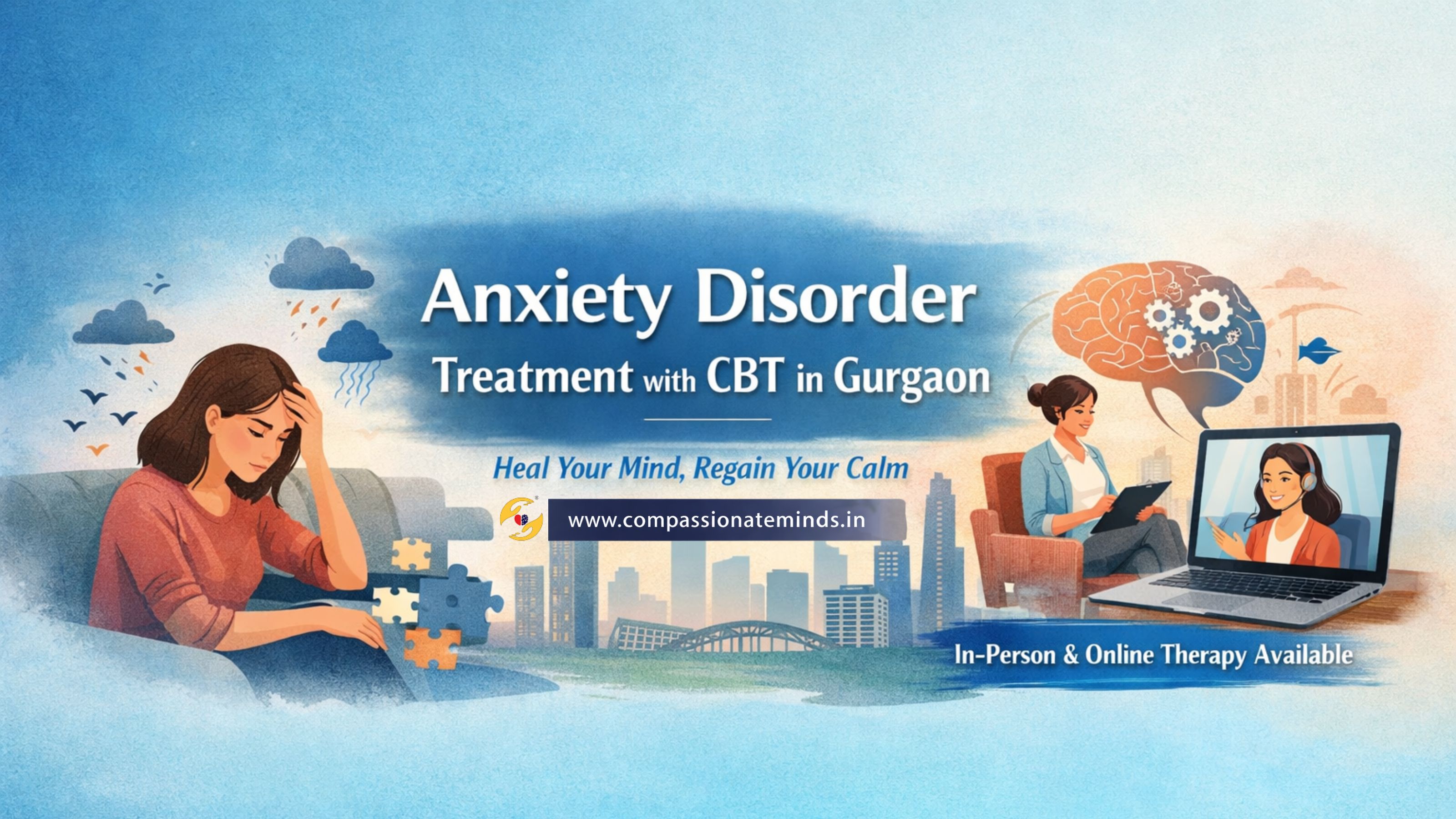
Anxiety Disorder Treatment with CBT in Gurgaon
Anxiety does not always show up in obvious ways. Sometimes it quietly becomes a part of your everyday life—affecting how you think, how you react, and how you feel even in calm situations. Many people searching for the Best Psychologist in Gurgaon are not just looking for solutions, but for a sense of relief they may have been missing for a long time.
Understanding Anxiety Beyond Stress
Anxiety is more than occasional worry. It can feel like a constant background noise in your mind—restless, repetitive, and exhausting. While some people experience it as racing thoughts, others feel it physically through a tight chest, fatigue, or uneasiness without a clear reason.
Over time, anxiety can begin to affect daily functioning:
- Difficulty focusing on tasks
- Avoiding social or professional situations
- Overthinking simple decisions
- Feeling mentally drained without doing much
Recognizing these patterns is often the first step toward change.
What is CBT and How Does It Help?
Cognitive Behavioral Therapy (CBT) is one of the most trusted and effective methods for managing anxiety disorders. It focuses on the connection between thoughts, emotions, and behavior.
Instead of only discussing problems, CBT works actively on solutions. It helps individuals:
- Identify negative thinking patterns
- Challenge unrealistic fears
- Replace harmful thoughts with balanced ones
- Build healthier behavioral responses
This approach is practical and structured, making it highly effective for long-term results.
How Anxiety Patterns Are Formed
Anxiety usually develops gradually. It may begin with a stressful event or repeated negative thinking. Over time, the brain starts to expect fear—even in safe situations.
For example:
- A single negative experience may lead to avoiding similar situations
- Avoidance reinforces fear, making it stronger
- Repeated worry creates a cycle that feels hard to break
CBT works by interrupting this cycle and helping you regain control.
Identifying Thinking Traps
One of the key aspects of CBT is recognizing distorted thinking patterns. These patterns often feel real, but they are not always accurate.
Common examples include:
- Catastrophizing: Assuming the worst will happen
- Overgeneralizing: Believing one mistake defines everything
- Mind reading: Thinking others are judging you
- All-or-nothing thinking: Seeing only extremes
By identifying these patterns, you begin to see your thoughts more clearly rather than automatically believing them.
What Happens During CBT Sessions
Starting therapy can feel uncertain, especially if you have never experienced it before. CBT sessions are structured yet flexible, designed around your pace.
Typically, sessions include:
- Discussing current thoughts and concerns
- Understanding triggers behind anxiety
- Learning techniques to manage reactions
- Practicing small exercises outside sessions
The process is collaborative. You are not told what to do—you are guided to understand and change your patterns.
Real-Life Benefits of CBT
The impact of CBT extends beyond therapy sessions. It gradually becomes a part of how you think and respond in everyday life.
With consistency, many people notice:
- Reduced intensity of anxious thoughts
- Better emotional regulation
- Improved confidence in handling challenges
- Clearer thinking and decision-making
It is not about eliminating anxiety completely, but about making it manageable.
Overcoming Avoidance
Avoidance is one of the biggest factors that keeps anxiety alive. The more you avoid something, the more your fear grows.
CBT gently helps you:
- Face fears in small, manageable steps
- Build tolerance toward discomfort
- Realize that feared outcomes are often exaggerated
This gradual exposure builds confidence and reduces fear over time.
Emotional Awareness and Acceptance
Many people try to push anxiety away, which can actually make it stronger. CBT teaches you to acknowledge emotions instead of resisting them.
You begin to:
- Observe your feelings without judgment
- Accept discomfort as temporary
- Respond with awareness instead of panic
This shift reduces the intensity of emotional reactions.
The Role of Professional Support
While self-help techniques can be helpful, structured guidance makes a significant difference. A trained therapist helps you stay consistent and focused.
They provide:
- Clear direction and practical tools
- A safe and non-judgmental space
- Support through difficult phases
This guidance ensures that you are not navigating anxiety alone.
Lifestyle Changes That Support Therapy
Combining CBT with healthy habits can enhance results. Small lifestyle changes can create a strong foundation for mental well-being.
Helpful practices include:
- Maintaining a regular sleep schedule
- Practicing mindfulness or breathing exercises
- Staying physically active
- Reducing caffeine intake
- Creating a balanced daily routine
These habits strengthen the effectiveness of therapy.
Breaking the Stigma Around Mental Health
Many people hesitate to seek help due to fear of judgment. There is a common belief that one should manage everything alone.
In reality, seeking support shows awareness and strength. Mental health care is just as important as physical health, and addressing it early can prevent deeper challenges later.
The Journey Toward Stability
Healing from anxiety is not immediate. It is a gradual process that requires patience and consistency. Some days feel easier, while others may feel challenging.
CBT helps you build skills that stay with you:
- You learn to pause before reacting
- You question anxious thoughts
- You respond more calmly to situations
These small shifts create long-term change.
When to Consider Therapy
If anxiety is affecting your daily life, it may be time to seek support.
Signs include:
- Persistent worry that feels uncontrollable
- Difficulty concentrating
- Physical symptoms like restlessness or fatigue
- Avoiding situations due to fear
- Feeling overwhelmed frequently
Early intervention can make the process smoother and more effective.
A Final Thought
You do not have to continue living with constant anxiety. With the right approach, change is possible.
As awareness grows, many individuals are now choosing Anxiety therapy online as a flexible and accessible way to begin their healing journey—allowing them to receive support from the comfort of their own space while still making meaningful progress toward a calmer, more balanced life.
 Mobile No. : +91-9151006808