
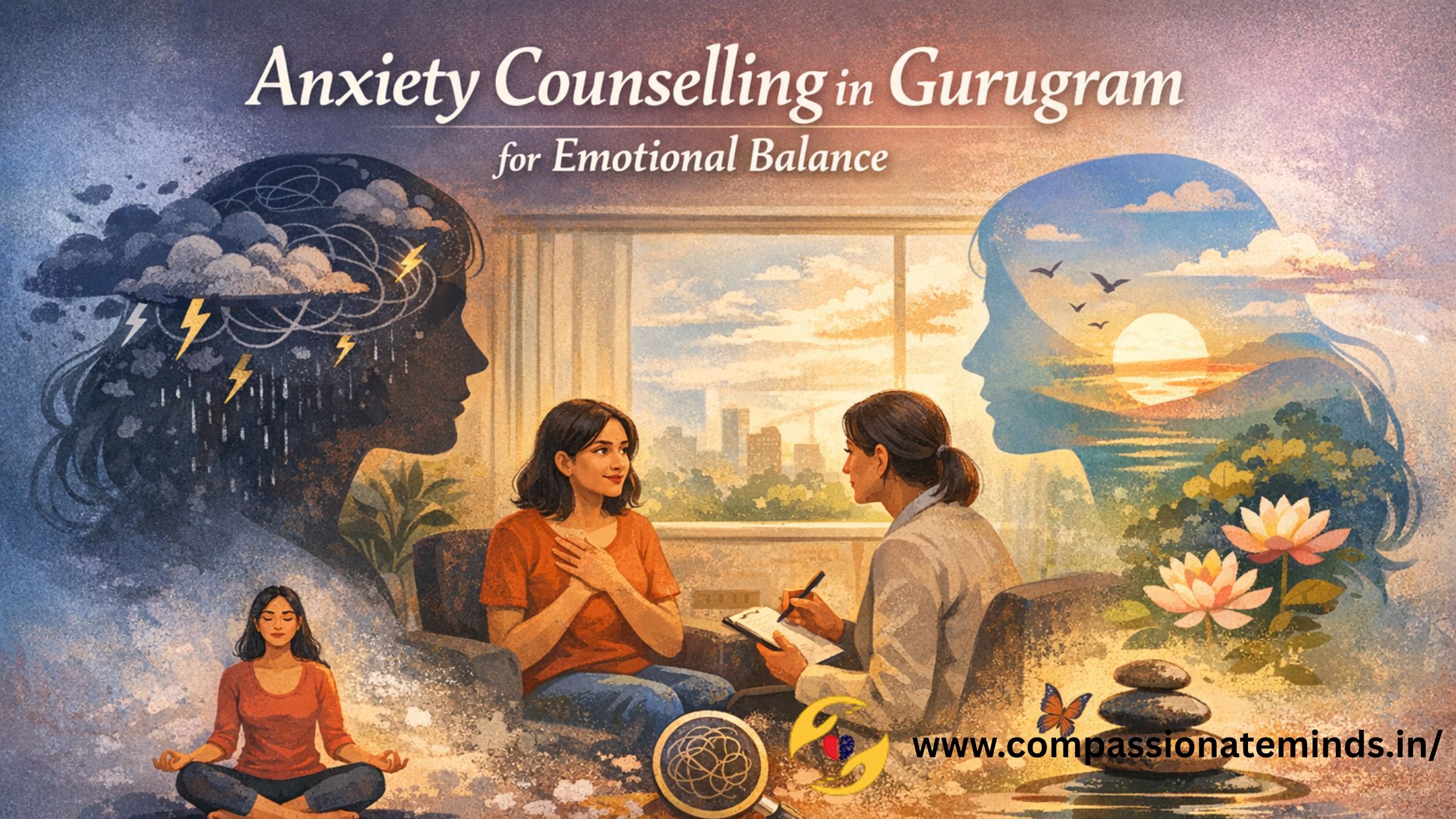
Anxiety Counselling in Gurugram for Emotional Balance
Anxiety rarely arrives loudly. Most of the time, it slips in quietly, changing the way mornings feel, the way thoughts move, the way the body reacts to everyday situations. Anxiety counselling in Gurugram offers a space where this experience does not need to be justified or explained away. It is a space where anxiety is listened to rather than rushed, and where emotional balance is approached with patience rather than pressure.
When Anxiety Becomes Part of Everyday Life
For many people, anxiety is not a single episode. It becomes a background presence. A constant sense of alertness. A feeling that something is about to go wrong, even when nothing visibly is. Life continues on the outside, but internally there is fatigue, restlessness, and a quiet struggle to feel settled.
This can be confusing. People often ask themselves why they feel this way when things seem fine. That confusion can slowly turn into self-doubt. Over time, anxiety is not just about fear. It becomes about questioning one’s own reactions and emotions.
Anxiety Is Not a Flaw in Character
One of the most misunderstood aspects of anxiety is the belief that it reflects weakness. In reality, anxiety is a protective response. It develops when the mind and body learn that staying alert feels safer than relaxing.
Past stress, emotional hurt, unpredictable environments, or long-term pressure can all teach the nervous system to remain on guard. Anxiety is not the problem. It is a signal. Counselling begins by listening to that signal rather than silencing it.
What Counselling Actually Feels Like
Counselling is not about quick solutions or forced positivity. It is about slowing down enough to notice what has been ignored for too long. Sessions offer room for pauses, uncertainty, and emotions that may not yet have words.
There is no requirement to perform or explain things perfectly. Over time, people begin to notice patterns. Certain thoughts that repeat. Certain situations that trigger unease. Certain body responses that arrive before the mind can make sense of them.
Awareness grows gently. Change follows naturally.
Creating Safety Before Creating Change
Before anxiety can soften, safety must be felt. Emotional safety is not a technique. It is an experience. Being heard without interruption. Being believed without having to convince. Being met with curiosity instead of judgment.
When a person feels emotionally safe, the nervous system begins to settle. This settling is subtle. Sometimes it shows up as deeper breathing. Sometimes as a sense of relief after speaking honestly. These small moments matter. They form the foundation for deeper healing.
Learning to Relate Differently to Anxious Thoughts
Anxiety often speaks in absolute terms. It predicts failure, danger, or loss. These thoughts can feel urgent and convincing. Counselling does not try to erase them forcefully.
Instead, therapy helps people notice their thoughts without immediately obeying them. Thoughts are explored with gentleness. Over time, individuals learn that thoughts are experiences, not commands. This shift creates space. And in that space, choice begins to appear.
Bringing the Body Back Into the Conversation
Anxiety is not only mental. It lives in the body. Tight shoulders. Shallow breath. A racing heart. Restlessness that makes it hard to sit still.
Counselling helps reconnect with these bodily experiences without fear. Noticing sensations without trying to control them allows the body to slowly relearn safety. When the body feels supported, emotional regulation becomes more accessible.
How Anxiety Shapes Relationships
Anxiety often affects how people relate to others. Some withdraw to avoid discomfort. Some overextend themselves to avoid conflict. Some seek reassurance repeatedly and still feel unsure.
Therapy offers a space to reflect on these patterns with compassion. Understanding how anxiety influences relationships opens the door to healthier boundaries, clearer communication, and deeper emotional connection.
Releasing the Habit of Self-Criticism
Many people struggling with anxiety are deeply self-critical. They believe they should be coping better or feeling differently. This inner pressure often intensifies anxiety rather than reducing it.
Counselling gently introduces self-compassion. Not as an idea, but as a practice. Learning to speak to oneself with patience changes the internal environment. Anxiety begins to feel less threatening when it is met with kindness.
What Progress Actually Looks Like
Progress in anxiety work is rarely dramatic. It is quiet and meaningful. Reacting a little less intensely. Recovering a little faster. Feeling more grounded during moments that once felt overwhelming.
Setbacks are part of the process. Counselling normalises this. Healing is not linear, and it does not need to be. What matters is the growing ability to respond rather than react.
Allowing Yourself to Be Supported
Seeking help is not an admission of failure. It is an act of self-respect. Choosing support means acknowledging that emotional well-being matters.
For individuals who value flexibility or prefer support that fits into their daily rhythm, Anxiety therapy online offers a thoughtful and accessible way to continue this work while staying connected to compassionate professional care.
 Mobile No. : +91-9151006808