
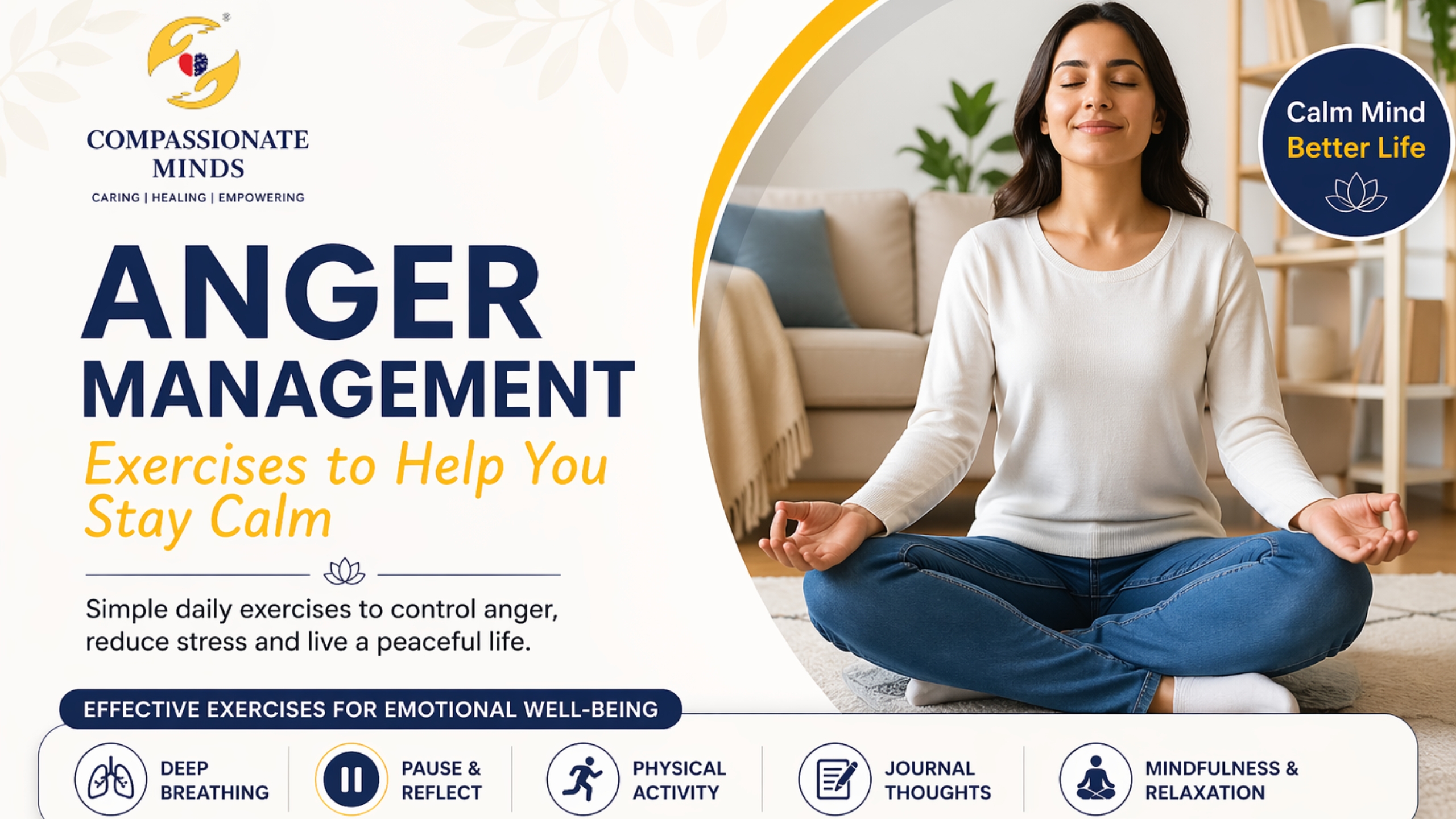
Anger Management Exercises to Help You Stay Calm
Anger is a natural emotion, but when it starts affecting your relationships, work, or mental peace, it becomes something that needs attention. Many people searching for solutions often come across terms like Best Psychologist in Gurgaon while looking for guidance, which reflects how common and serious unmanaged anger can be. The good news is that anger can be controlled with the right awareness, practice, and simple daily exercises.
Understanding Anger Before Controlling It
Before you try to control anger, it is important to understand what triggers it. Anger is usually a response to frustration, fear, hurt, or feeling out of control. It is not always about the situation itself but about how your mind interprets it.
For example, a small disagreement can feel like a personal attack if your stress levels are already high. That is why anger management is not just about stopping reactions but about understanding emotions at a deeper level.
Why Managing Anger is Important
Uncontrolled anger can impact every area of your life. It can damage relationships, affect your professional image, and even harm your physical health. High anger levels are linked with increased stress hormones, higher blood pressure, and poor sleep.
Learning to manage anger does not mean suppressing it. It means expressing it in a healthy and constructive way.
Simple Anger Management Exercises You Can Start Today
1. Deep Breathing Technique
One of the fastest ways to calm your mind is controlled breathing. When you feel anger rising, your body goes into a fight-or-flight mode. Deep breathing helps reverse that.
Try this:
- Inhale slowly for 4 seconds
- Hold for 4 seconds
- Exhale for 6 seconds
Repeat this cycle for a few minutes. You will notice your body calming down almost immediately.
2. The Pause Method
Most anger-related problems happen because of impulsive reactions. The pause method helps you create space between emotion and reaction.
When you feel triggered:
- Stop for a moment
- Count to 10
- Ask yourself: “Is this worth reacting to right now?”
This small pause can prevent big mistakes.
3. Physical Release Exercise
Anger is energy. If you do not release it, it builds up. Physical activity is one of the healthiest ways to channel that energy.
You can:
- Go for a brisk walk
- Do push-ups
- Try skipping or stretching
Movement helps release tension and clears your mind.
4. Journaling Your Thoughts
Sometimes anger comes from unexpressed emotions. Writing them down can help you process what you are feeling.
Take a notebook and write:
- What triggered your anger
- How you felt
- What you wanted to say
This helps you understand patterns and respond better next time.
5. Mindfulness Practice
Mindfulness means staying present in the moment without judgment. When you are mindful, you become aware of your thoughts instead of reacting automatically.
A simple exercise:
- Sit quietly for 5 minutes
- Focus on your breath
- Notice your thoughts without reacting
Over time, this builds emotional control.
6. Change Your Self-Talk
Anger is often fueled by negative inner dialogue like:
- “This is unfair”
- “They always do this”
Replace these with balanced thoughts:
- “This is frustrating but I can handle it”
- “Let me respond calmly”
Your thoughts directly influence your reactions.
7. Time-Out Strategy
Just like children need time-outs, adults do too. When emotions are too intense, stepping away is the best solution.
You can:
- Leave the room
- Take a short walk
- Avoid continuing the conversation
Returning later with a calm mind leads to better outcomes.
8. Identify Triggers
Make a list of situations that trigger your anger. It could be:
- Traffic
- Work pressure
- Certain people or conversations
Once you identify triggers, you can prepare your response in advance.
9. Practice Empathy
Sometimes anger comes from misunderstanding others. Try to see the situation from the other person’s perspective.
Ask yourself:
- “Why might they be acting this way?”
- “Could there be another explanation?”
Empathy reduces emotional intensity.
10. Relaxation Techniques
Relaxation is not a luxury, it is a necessity for emotional balance.
You can try:
- Listening to calming music
- Taking a warm shower
- Practicing yoga
A relaxed mind reacts less aggressively.
When Exercises Are Not Enough
While these exercises are effective, sometimes anger is deeply rooted in past experiences, trauma, or ongoing stress. In such cases, self-help techniques may not be enough.
If you notice:
- Frequent outbursts
- Regret after reacting
- Difficulty controlling emotions
It might be time to seek professional help. Therapy provides structured guidance, emotional understanding, and long-term solutions.
Building Long-Term Emotional Strength
Anger management is not a one-time fix. It is a continuous process of self-awareness and improvement.
Here are a few habits that help:
- Maintain a healthy routine
- Get enough sleep
- Eat balanced meals
- Practice gratitude
Small daily changes create lasting emotional stability.
Final Thoughts
Staying calm is not about avoiding anger, it is about learning how to handle it wisely. With consistent practice of these exercises, you can gain better control over your emotions and improve your overall quality of life.
If you ever feel that managing anger on your own is becoming difficult, searching for support like anger management near me can be the first step towards finding the right guidance and building a calmer, healthier mindset.
 Mobile No. : +91-9151006808