
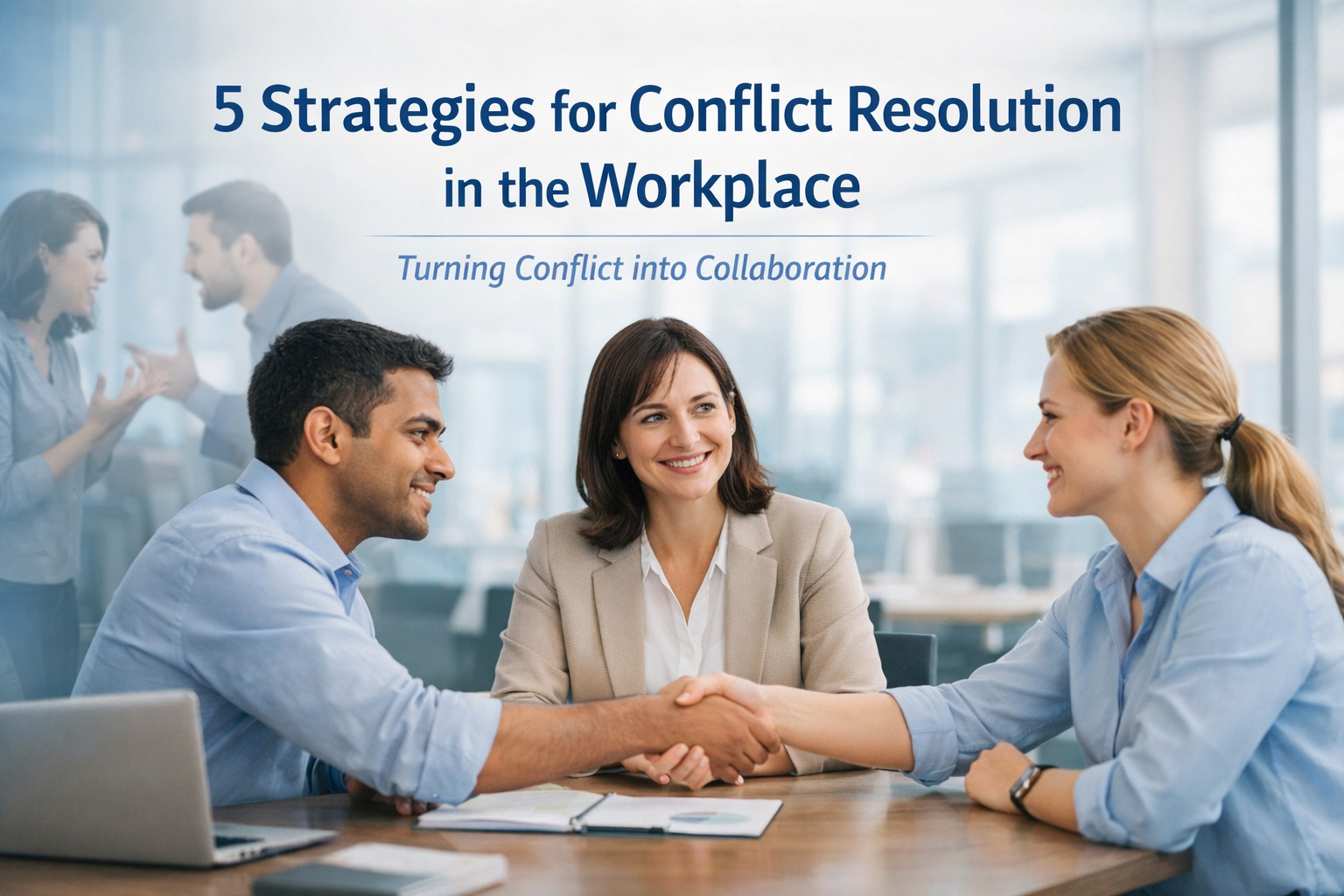
5 Strategies for Conflict Resolution in the Workplace
Workplace conflicts are more common than most people admit. Whether it is due to differences in opinions, communication gaps, or pressure from deadlines, misunderstandings can quickly escalate into larger issues. In a growing corporate environment, the role of expert therapists in Gurgaon has become increasingly valuable as professionals seek structured approaches to handle disputes effectively. Alongside this, conflict resolution strategies are no longer optional—they are essential for maintaining a productive and emotionally healthy workspace.
Understanding Workplace Conflict
Conflict in the workplace is not always a negative thing. In fact, when handled correctly, it can lead to innovation, better decision-making, and stronger team dynamics. Problems arise when conflicts are ignored, mishandled, or allowed to grow without resolution. Common causes include poor communication, unclear roles, personality clashes, and stress.
Recognizing the root cause of conflict is the first step toward resolving it. Without understanding what triggered the issue, any solution will only be temporary.
1. Encourage Open and Honest Communication
One of the most effective strategies for resolving workplace conflict is promoting open communication. Employees should feel safe expressing their thoughts without fear of judgment or retaliation. When communication channels are transparent, misunderstandings can be addressed early before they turn into major disputes.
Managers can encourage this by actively listening, asking open-ended questions, and ensuring that every voice is heard. Sometimes, simply allowing both parties to explain their perspectives can resolve half the issue.
2. Focus on the Problem, Not the Person
It is easy for conflicts to become personal, especially when emotions are involved. However, focusing on individuals instead of the issue only worsens the situation. A professional approach involves separating the problem from the people involved.
Encourage team members to discuss behaviors, situations, or outcomes rather than attacking personalities. This creates a more respectful environment and makes it easier to find practical solutions.
3. Practice Active Listening
Active listening is more than just hearing words—it involves understanding emotions, intentions, and underlying concerns. When people feel heard, they are more likely to cooperate and work toward a resolution.
Techniques for active listening include maintaining eye contact, avoiding interruptions, summarizing what the other person said, and asking clarifying questions. This approach not only resolves conflicts but also strengthens trust within teams.
4. Find Common Ground
In most conflicts, there is always some level of shared interest or goal. Identifying this common ground can shift the focus from disagreement to collaboration.
For example, two employees may disagree on how to complete a task, but both want the project to succeed. Highlighting this shared objective can help both parties move away from conflict and toward cooperation.
5. Seek Professional Guidance When Needed
Sometimes, workplace conflicts become too complex to handle internally. In such cases, seeking professional support can be highly beneficial. Trained counselors and therapists bring neutral perspectives and structured techniques that help individuals navigate conflicts more effectively.
Organizations today are increasingly recognizing the importance of mental well-being and interpersonal harmony. This is where Conflict management counseling plays a crucial role in helping employees understand their triggers, improve communication skills, and build healthier professional relationships.
The Importance of a Positive Work Culture
Beyond strategies, creating a culture that discourages unhealthy conflict is essential. This includes promoting respect, encouraging teamwork, and providing regular training on communication and emotional intelligence.
A positive work culture not only reduces conflicts but also ensures that when disagreements arise, they are handled constructively.
Final Thoughts
Conflict in the workplace is inevitable, but it does not have to be destructive. With the right strategies, it can become an opportunity for growth and stronger collaboration. By encouraging open communication, focusing on solutions, practicing active listening, and seeking professional help when needed, organizations can create a more balanced and productive environment.
Ultimately, investing in structured approaches like Conflict management counseling ensures that conflicts are not just resolved—but transformed into learning experiences that benefit both individuals and the organization as a whole.
 Mobile No. : +91-9151006808